Local SEO for contractors comes down to five things Google checks before it sends a nearby homeowner your way. If your business name, address, and phone number are scattered across the web, or your reviews have gone stale, you are handing jobs to the contractor who took the time to get those details right. This guide names each factor, gives you one action step to fix it, and ends with a checklist you can use before you put the tools down.
What Google Looks For Before It Sends Homeowners to a Contractor
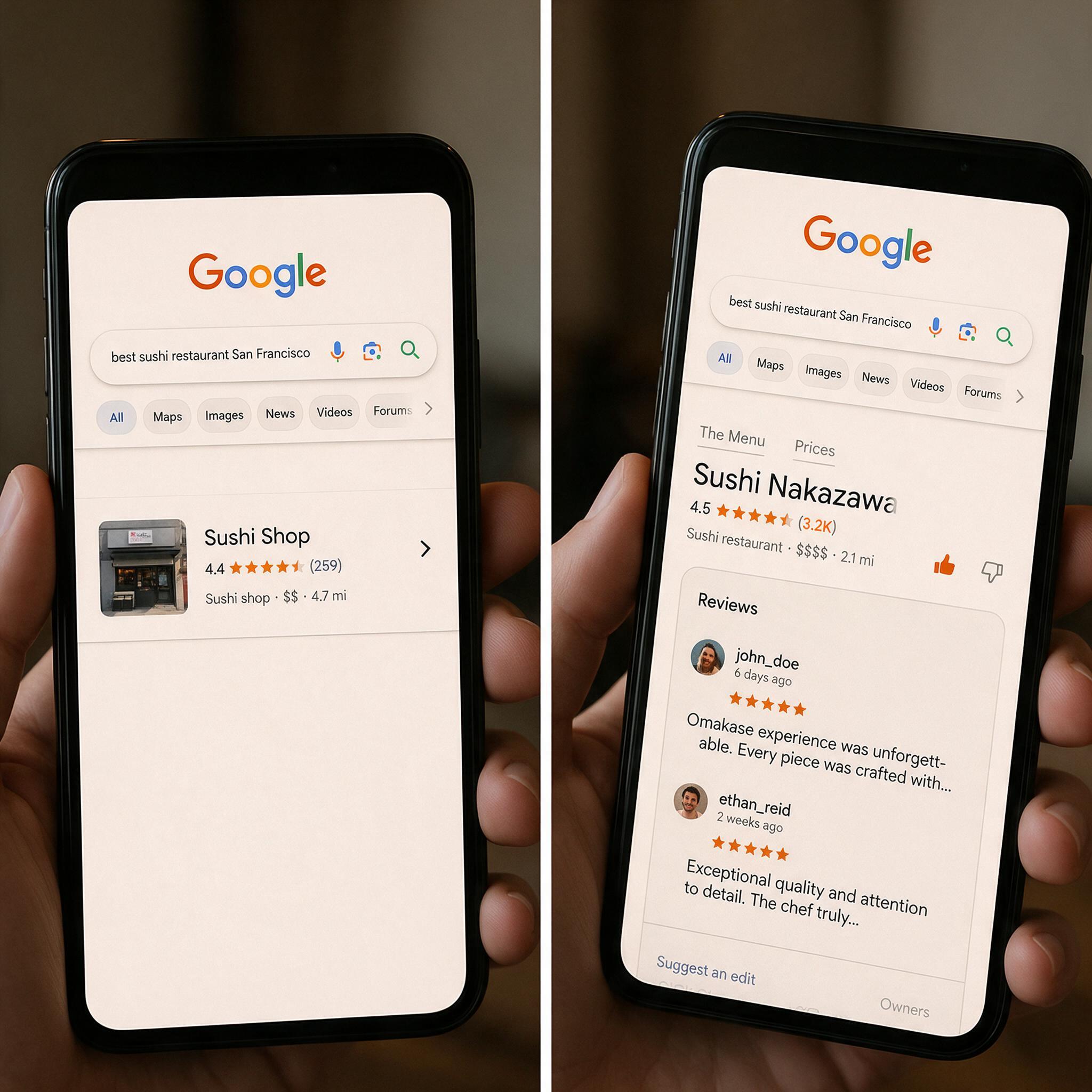
Google ranks local results with three signals: relevance, distance, and prominence. No hidden switches, no backroom tweaks. Relevance means how well your business matches the search. Distance means how close you are to the person asking. Prominence means how well-known and trusted Google thinks you are. Get those three right and you show up. Get them wrong and a contractor with cleaner data takes the job. When a neighbor searches “plumber near me,” Google compares every contractor within driving distance and ranks them by who it trusts most. A complete profile and consistent listings make you easy to trust. Inconsistent data makes you risky.
Why is a competitor showing up before me in local search?
Because Google decided that competitor is more relevant, closer, or more prominent than you. Most of the time, it is a data problem. Their business name, address, and phone number match everywhere online. Their Google Business Profile is complete with the right category and fresh photos. Their reviews are recent. If your profile is missing a category, your citations are inconsistent, or your reviews stopped months ago, that is enough for Google to rank them first. Not a penalty. Just a gap in the basics. The fix is not to outsmart Google. It is to close the gap one factor at a time.
What is local SEO for contractors?
Local SEO for contractors is the work that makes Google trust your business in nearby searches. When a homeowner types “plumber near me,” “roofer in Austin,” or “emergency electrician in my neighborhood,” Google reads that as local intent. It wants to show businesses with consistent information, a complete profile, real reviews, location-specific content, and links from local sources. That is the five-factor system this guide breaks down. It is not about writing for robots. It is about making it easy for Google to verify who you are, where you work, and why a nearby homeowner should pick you.
Do I need nationwide visibility to get local work?

Local SEO for Contractors: The 5 Things Google Looks For
Why is your Google Business Profile the first thing Google checks?
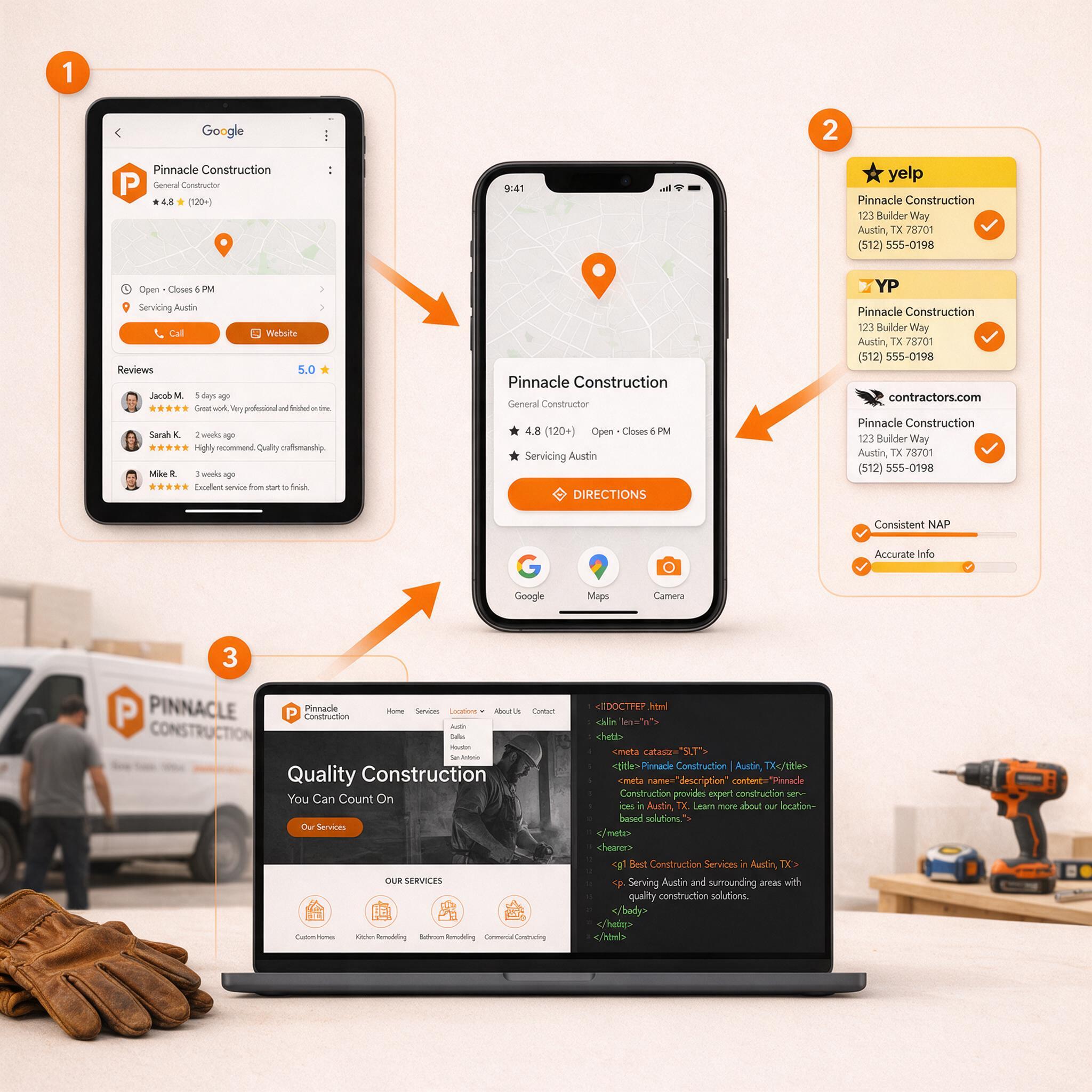
Your Google Business Profile is the fastest way to tell Google who you are and where you work. Claim it, then make sure your name, address, and phone number match your website exactly. Choose the right category — plumber, roofer, electrician — so Google knows your trade before anything else. Add your service areas, hours, and five real photos of recent jobs. A complete profile signals that your business is active and ready for calls.
Do local citations still matter for contractors in 2026?
Yes. A citation is any mention of your business on the web — a directory, a trade site, a local blog. Every listing should spell your name, address, and phone number exactly the same way. One mismatch can confuse Google and cost you a top spot. Start with the big directories for your trade, update every page, then check back every few months. Consistency is the whole game.
How many reviews do you need for local SEO for contractors?
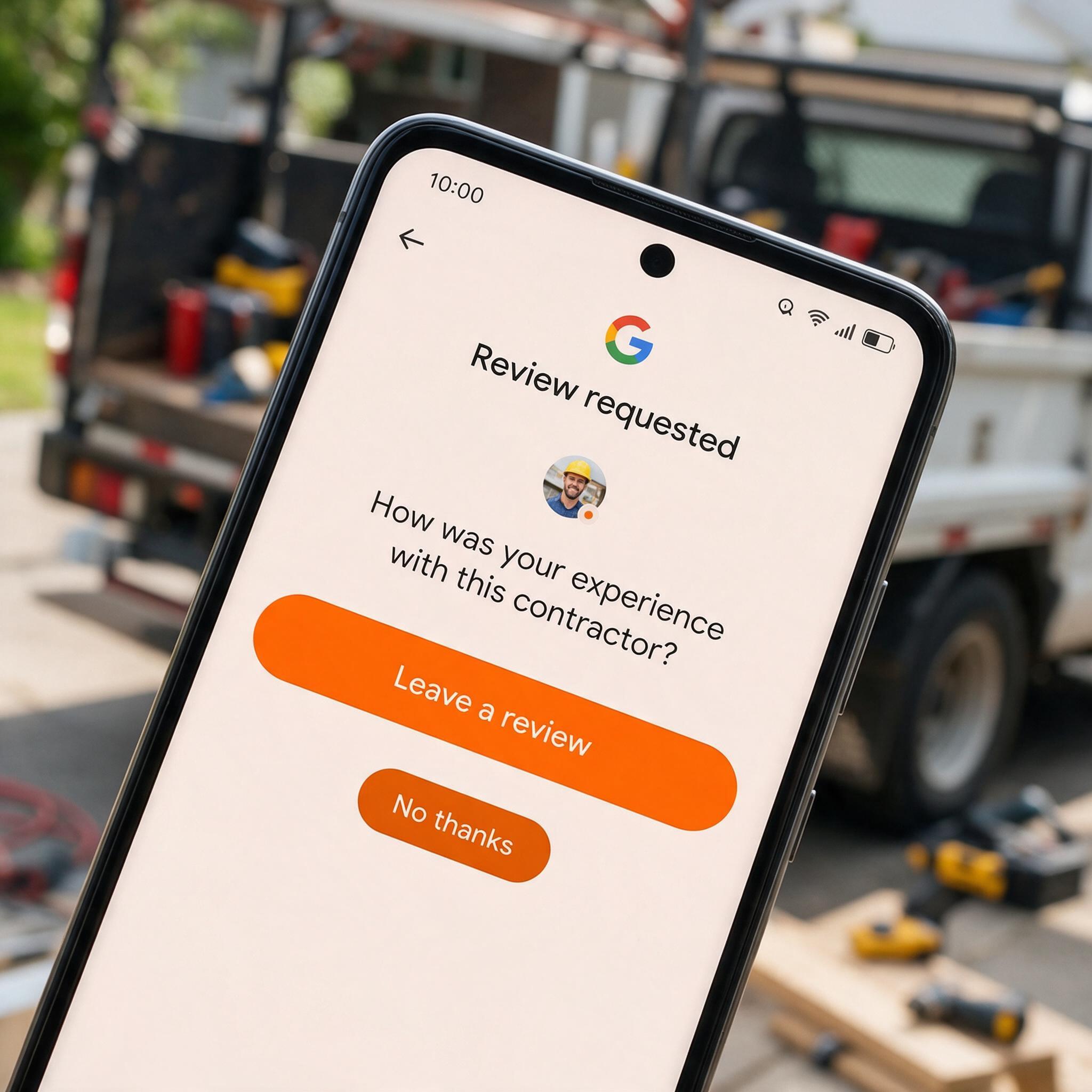
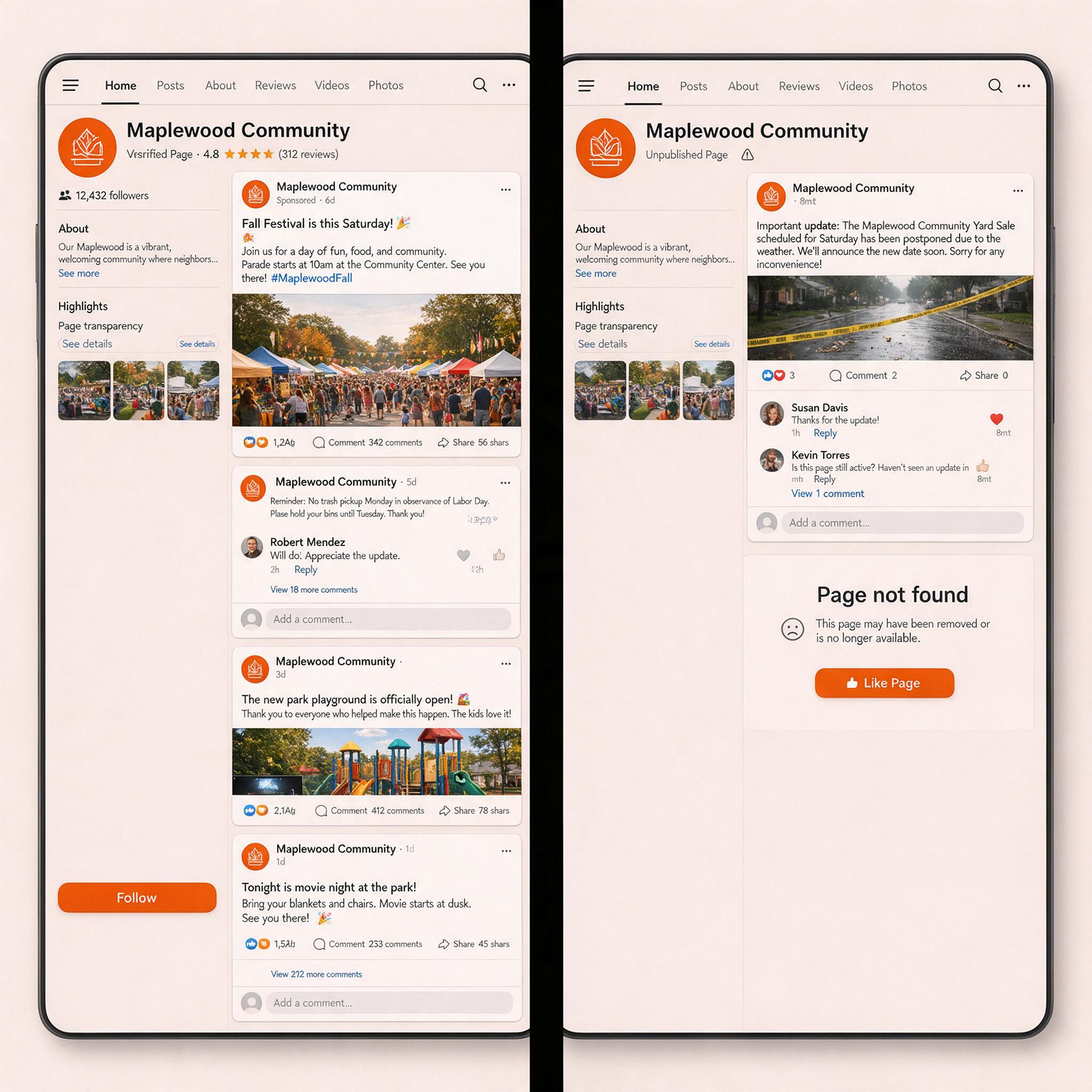
There’s no magic number, but count and recency both matter. Ask happy customers for a review while the job is fresh — a text link works better than a card they’ll lose. Respond to the reviews you get, even the bad ones. It shows Google you’re engaged. A steady drip of new reviews beats a burst from two years ago.
How do you add location-specific content without sounding spammy?
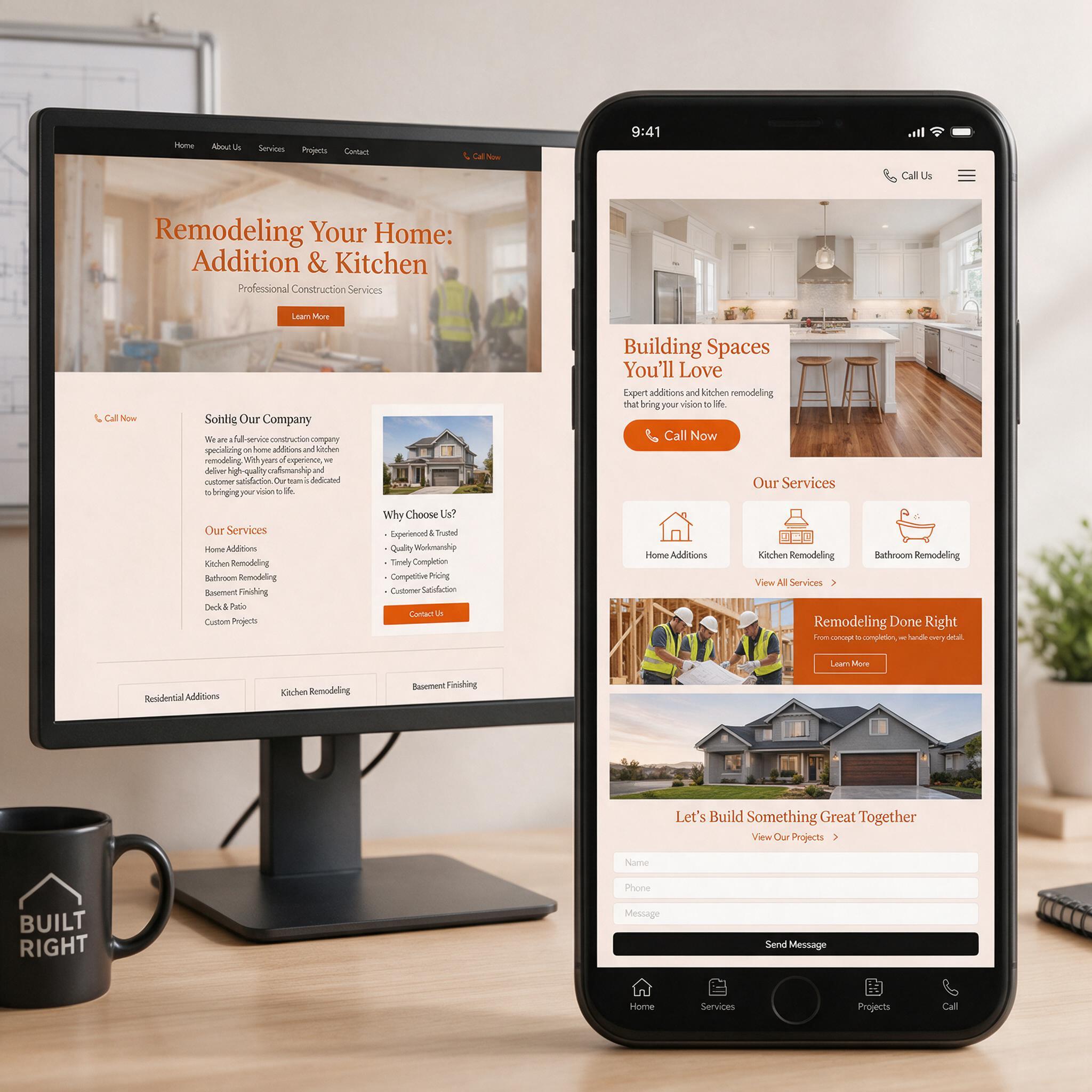
Create a page for every city or neighborhood where you work. Name the services you offer there, using the phrases a homeowner would type into Google. “Water heater repair in Maplewood” reads natural and tells Google exactly where you operate. Include your phone number, service area, and a photo of a local job. Skip the keyword stuffing — write for the person, not the search engine.
How do contractors get backlinks from local sources?
Ask suppliers, local trade groups, or the chamber of commerce to mention your business on their site. Sponsor a little league team and ask for a link on their page. One link from a local source carries more weight than a pile of random directories. It’s a vote of confidence from a trusted neighbor, and Google treats it that way.

Your Local SEO Checklist: Where to Start and What to Keep Up
Which local SEO factor should a contractor fix first?
If your Google Business Profile isn’t claimed, start there. Thirty minutes on that one factor will move the needle more than anything else on this list. Claim it, verify it, and fill out every field — name, address, phone, hours, service area, categories. Google pulls all of that straight into the map pack when a homeowner searches “plumber near me.” A claimed profile with complete info tells Google you’re real and open for business. None of the other factors matter if Google can’t find your profile in the first place. That’s why this is step one in local SEO for contractors.
What can a contractor do today to improve local SEO?
Today’s checklist is short, and each item feeds one of the five factors. Confirm your name, address, and phone number are identical on your website, your Google profile, and every directory that lists you. One wrong digit scrambles the signal. Add five photos of recent work — finished kitchens, clean panel work, a new water heater install. Photos show Google you’re active. Request one review from a customer you finished for this week. Write one page about a city you serve, not a generic “about us” page. Contact one local site — a supplier, a trade group, a chamber of commerce — and ask for a link. Five small actions. One afternoon. That’s a full day of local SEO done before dinner.
What should a contractor check every month?
Weekly: post one photo, send review requests, and respond to any new reviews. Monthly: publish one post about a job in a specific area, check your citations, and look for one new local link. Keep the cadence. None of this takes a full day. It’s a habit, not a project. Weekly tasks keep your profile active. Monthly tasks build the bigger signals. Together they compound.
Don’t try to finish all five factors in one night. Each one you complete puts you ahead of most competitors in your area. Most contractors never get past step one. They mean to, but the job runs long and the checklist gets pushed to next week. That’s the edge. Do the checklist, keep the rhythm, and you’ll be the contractor Google sends the next homeowner to.

Some of that checklist is one-and-done: claim your profile, fix your citations, clean up your pages. The rest—reviews, fresh content, fast follow-up—never stops. That’s the work that decides whether you show up next month.
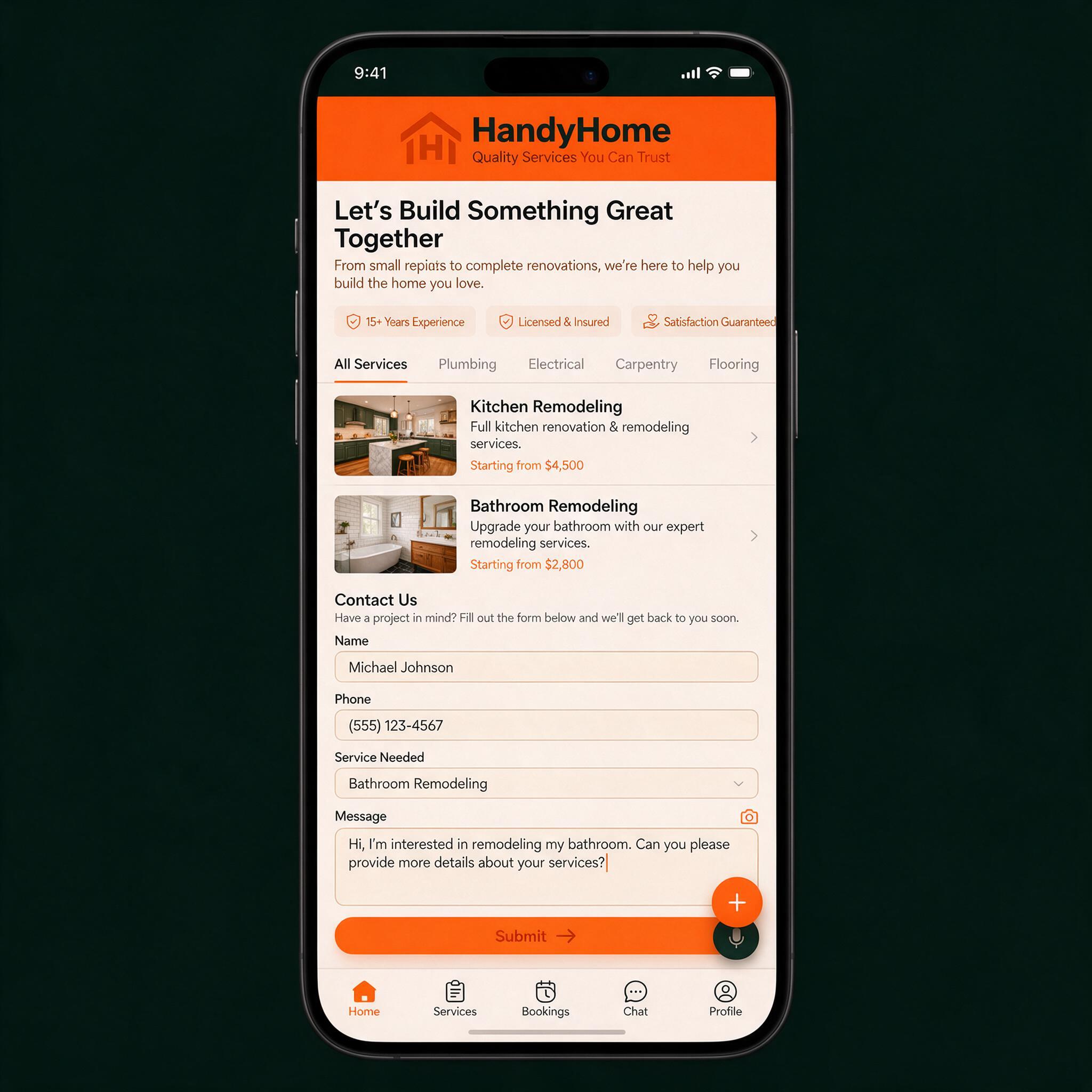
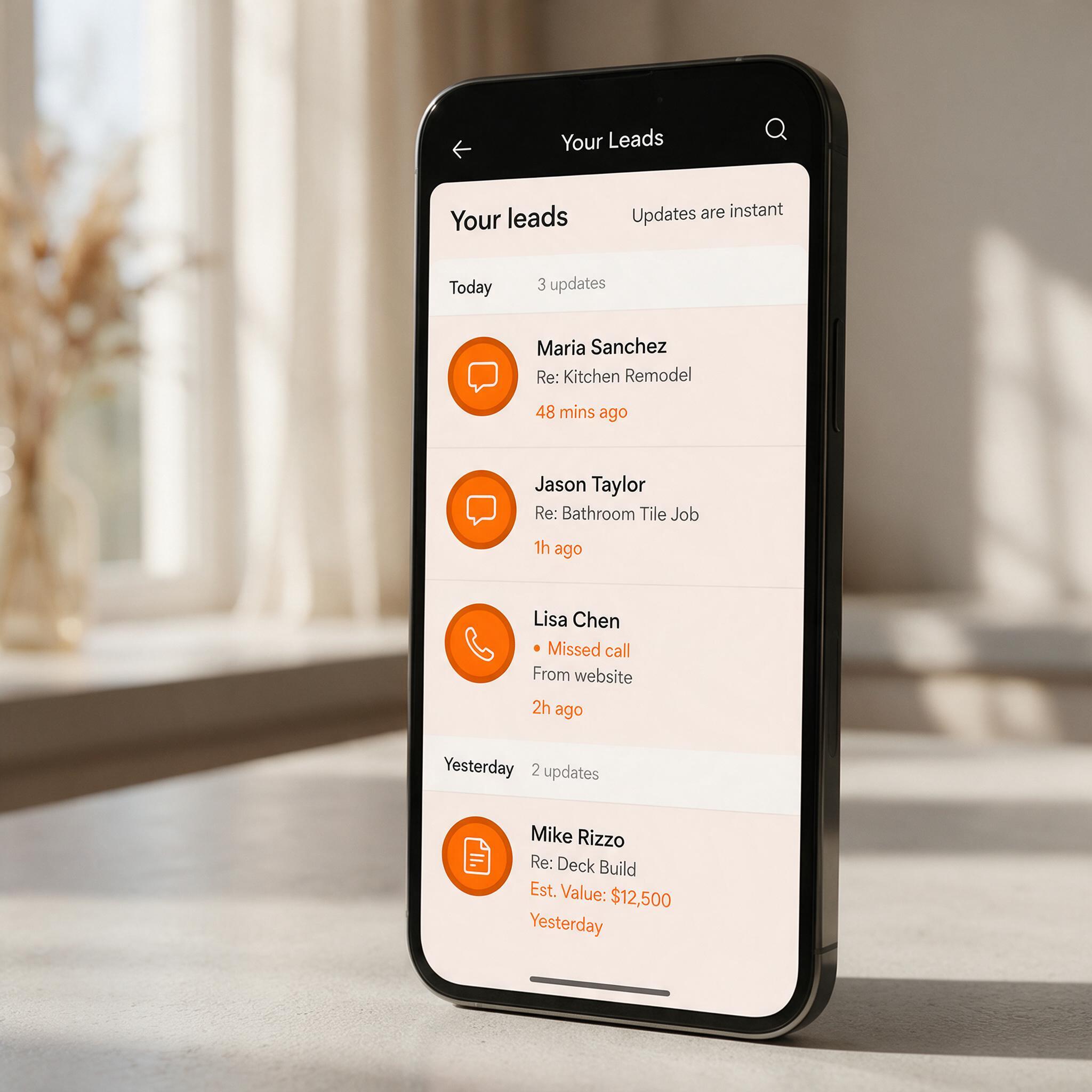
BizFuel exists for that exact problem. For $297 a month, we bundle the recurring side of local SEO into one plan: a contractor-focused website, 10 blog posts and 20 social posts a month, automated review requests, and local SEO groundwork—all managed from a mobile app.